Polish language certificate for foreigners – how to pass the B1 and B2 exams?
11 Sep | 2025
Obtaining the state Polish language certificate at the B1 or B2 level is a step that can open many opportunities for you – from studying in Poland, to better job prospects, and even fulfilling legal requirements related to your stay. The exam requires practical language knowledge, as well as good organization and preparation strategies. In our guide, you'll find information about the test structure, dates, registration, and common pitfalls to watch out for. This way, you'll learn how to effectively prepare for the exam and approach it with greater confidence.

Table of content
1. What is the Polish language certificate for foreigners and why should you get it?
2. Egzamin B1 i B2 polski dla obcokrajowców – co daje każdy poziom?
3. Egzamin certyfikatowy – terminy w 2025 i 2026 roku
4. How to Register for the Polish Language Certification Exam – Step-by-Step
5. Structure and Format of the Exam: What the B1 and B2 Exams Look Like (Duration, Modules, and Passing Requirements)
6. The B1 Polish Exam for Foreigners vs. the B2 Exam – The Real “Difficulty”
7. How to Pass the Polish B2 and B1 Exams – Practical Tips
8. Sample tasks and topics: writing, speaking, listening, reading
9. Preparing for the Polish Certification Exam – Common Pitfalls and How to Avoid Them
10. FAQ: Is it hard to pass the B1 and B2 Polish exams? + Practical Answers

1. What is the Polish language certificate for foreigners and why should you get it?
The Polish language certificate for foreigners is a state document, serving as the only official proof confirming the knowledge of Polish by foreigners. It is issued by… The State Commission for the Certification of Polish as a Foreign Language Proficiency which makes the certificate recognized both in the country and by certain foreign institutions.
Why is it worth obtaining the certificate?
• For studies in Poland: Many universities require a B2 level certificate to admit foreign candidates.
• For work: Employers treat the certificate as proof of real language and communication skills in a professional environment.
• For legal procedures: The certificate is often mandatory for formalities such as applying for Polish citizenship or permanent residence in Poland.
• For personal development: Regardless of formal requirements, having the certificate provides confidence in daily communication, enhances language skills, and motivates consistent learning.
Having the certificate is not just a formality – it is a real document that opens doors to education, work, and life in Poland.
2) B1 vs B2 Polish exam – which level should you choose and why?
The B1 Polish language exam is often required in procedures related to obtaining Polish citizenship, permanent residency, or a residence card. It may also be needed in some schools and for selected study programs.
At this level, the candidate should be able to communicate freely in typical, everyday situations – in a shop, at a government office, at the doctor’s, or during casual conversations. The B1 Polish exam for foreigners also tests the ability to understand simple texts, write short messages or emails, and talk about events from one’s own life, plans, and opinions.
Poziom B1 to pierwszy stopień prawdziwej „samodzielności językowej”. It means that you can manage in Poland without much help from others – not only do you understand what someone is saying to you, but you can also respond and take part in a simple conversation.
The B2 Polish exam is the next step towards full independence. It means greater comfort in conversations not only about everyday matters but also on more complex topics – such as culture, education, work, or current events.
At this level, the candidate should be able to understand longer and more complex texts, argue their point of view, express opinions, and engage in conversations in more demanding contexts, such as at a professional meeting or during a university discussion.
For many people, B2 is a breakthrough level – it allows you to study in Polish, increases your chances of finding a good job, and makes a strong impression on employers. It’s no surprise that language schools and exam centers often emphasize that this level is the most commonly expected in recruitment processes, both for university admissions and for jobs in Poland.
Summary: Choosing between B1 and B2
If your goal is professional work or studies in Poland, the B2 level definitely offers broader opportunities and is more commonly required by universities and employers. However, for procedures related to citizenship or permanent residency, the B1 exam is usually sufficient. (It’s always a good idea to check the specific requirements with the institution where you are submitting your documents.)
Statistics from recent years clearly show that the majority of candidates choose the B1 Polish exam for foreigners – it makes up the overwhelming majority of all candidates. This confirms that the path of “first B1, then B2” is not only popular but also reasonable: you obtain your first certificate faster, and then you can prepare for the higher level at a more relaxed pace.
What does the B1 certification exam look like?
3) Dates for the state exam in 2025 and 2026 and registration – how to organize yourself
The state exam is held several times a year – usually four sessions. The dates are announced by the Commission at the beginning of each year.
When are the certification exam sessions held?
The announced schedule for 2025 and 2026 includes:
• November 15–16, 2025 (Saturday-Sunday) – levels B1, B2, C1, and C2 (group adapted to the needs of adults) – the last exam of the year.
Exam dates for 2026:
• February 14–15, 2026 (Saturday-Sunday) – levels B1 and B2 (group adapted to the needs of adults, children, and teenagers)
• April 25–26, 2026 (Saturday-Sunday) – levels B1 and C1 (group adapted to the needs of adults)
• June 27–28, 2026 (Saturday-Sunday) – levels B1 and B2 (group adapted to the needs of adults)
• October 17–18, 2026 (Saturday-Sunday) – levels B1, C1, and C2 (group adapted to the needs of adults)
Registration for the exam is conducted by authorized centers – their list and updates are published on the website certyfikatpolski.pl. Among these centers is, for example, the Varia Polish Language Center in Kraków, where you can also take preparatory courses for the exam.
4) How to register for the Polish language exam?
The registration process for the certification exam is simple and follows a few steps:
- Choosing the city and exam center – decide where you want to take the test.
- Online registration – fill out the application form available on the website of the chosen exam center.
- Exam fee – make the payment or transfer according to the instructions provided by the exam center.
- Submitting required documents – these are usually copies of your passport or identity card.
This is the procedure, among others, at our Varia Polish Language Center. If you want to register for the B1 or B2 certification exam in Kraków, you can do so here. https://forms.gle/6CuWfBt4fRwbSkAc9.
The cost of taking the Polish language exam for foreigners depends on the level and the exam center. At our Varia Polish Language Center, the following rates apply:
- Exam fee: 150 euros for B1 or B2 level (for adults).
- Issuance of the certificate: an additional 20 euros.
Here are a few practical tips:
- Book your date early – the fee is linked to registration, so it’s a good idea to make the payment after signing up for the exam to ensure your spot.
- Check the payment method – most exam centers offer bank transfer, and some also allow online card payments.
- Don’t leave the payment until the last minute – some exam sessions fill up quickly, and failure to make the payment may result in losing your spot.
- Make sure you have all the required documents – usually a copy of your passport or ID card, needed to verify your identity.
By planning your payments and preparing your documents in advance, the entire registration process for the Polish language certification exam runs smoothly and without stress.

What happens after the exam?
5) Structure and Course of the B1 and B2 Exams – Time, Modules, and Passing Thresholds
The Polish language exams at B1 and B2 levels consist of two parts: written and oral. The differences between B1 and B2 mainly concern the duration, number of tasks, scoring, and the required passing threshold.
B1 Exam (for adults)
Total time for the written part: 190 minutes
- Written Modules:
- Listening Comprehension – 25 minutes (4–5 tasks, 30 points)
- Reading Comprehension – 45 minutes (4–5 tasks, 30 points)
- Grammar and Vocabulary – 45 minutes (8 tasks, 30 points)
- Writing – 75 minutes (3 tasks, 30 points)
- Total points in the written part: 120 points
- Oral Part: Up to 15 minutes, 3 tasks, 40 points
- Passing Threshold: At least 50% of the points from each module and from the oral part.
B2 Exam (for adults)
Total time for the written part: 240–250 minutes (The time may vary slightly depending on the source: according to the module table, it’s 240 minutes; officially, the maximum is 250 minutes.)
- Written Modules:
- Listening Comprehension – 30 minutes (5 tasks, 40 points)
- Reading Comprehension – 60 minutes (5 tasks, 40 points)
- Grammar and Vocabulary – 60 minutes (8–9 tasks, 40 points)
- Writing – 90 minutes (3 tasks, 40 points)
- Total points in the written part: 160 points
- Oral Part: Up to 15 minutes, 3 tasks, 40 points
- Passing Threshold: At least 60% of the points from each module and from the oral part
Oral Part B1–B2
The oral part lasts up to 15 minutes and assesses the ability to formulate spoken responses, including:
- brief preparation of answers,
- conducting a conversation and interacting with the examiner,
- presenting one’s own opinions and describing situations.
Worth knowing: For children and adolescents, the exam is passed with a minimum of 50% of the points in both the written and oral parts.
6) Polish B1 and B2 Exams – Difficulty: What is it and how to "tame" it?
Is the B1 and B2 Exam Difficult? – This question is most commonly asked by those preparing for the Polish language certificate exam. The answer is simple: the exam presents certain challenges, but with proper preparation, it is entirely passable.
- B1: To pass, you need to score at least 50% of the points in each module.
- B2: The passing threshold is higher – it requires at least 60% of the points in each part of the exam.
For many people, the biggest challenge is not the language aspects themselves, but the stress and the need to showcase skills across all parts of the exam.
The most common difficulties are:
- Listening comprehension – the recordings are fast and natural, making it challenging to catch every detail.
- Writing longer responses
- Speaking under time pressure – especially in oral tasks that require argumentation.
To increase your chances of success, it’s helpful to prepare under the guidance of experienced instructors. A preparatory course for the Polish certificate, such as the one offered at our Polish Language Center Varia, allows you to practice all exam modules, receive practical tips, and approach the test with greater confidence.
More information about the online course can be found here: https://kurspolskiego.pl/kursy-w-szkole/kurs-przygotowujacy-do-egzaminu-b1/
Information about the in-person course at the school is available here: https://kurspolskiego.pl/kursy-online/kurs-semestralny-online/
7) How to Pass the Polish B2 and B1 Exams?
Passing the B1 or B2 Polish exam requires consistent effort, but it is not impossible – even if you mostly study independently. The key is a well-thought-out strategy and regular practice of all skills: listening, reading, writing, and speaking.
Here are a few practical tips:
- Listen to Polish every day – podcasts, news, movies, or YouTube channels. Try not only to listen but also to take brief notes, repeat new words and phrases.
- Read texts in Polish – articles, ads, short stories. Pay attention to vocabulary and grammatical structures that frequently appear on the exam.
- Practice writing – regularly create short texts: emails, descriptions, short essays. After a few attempts, you can check your answers with the help of a teacher or online tools to verify mistakes.
- Speak Polish every day – even if it’s just to yourself. Describe your actions, repeat new vocabulary aloud, record yourself, and then listen back. If possible, converse with native speakers or other learners.
- Take practice tests – get familiar with the exam structure and get used to the time limits for completing tasks. Even one test per week can be very helpful in your preparation.
- Take note of difficulties – if the same mistakes keep repeating, dedicate more time to them. This will make your learning more effective.
Remember that B1 and B2 differ in difficulty, so for B2, it’s worth spending more time on writing and speaking, especially on arguing your opinions and expanding your responses.
If you want to maximize your chances and be sure you’re practicing everything that will appear on the exam, it’s worth considering a preparatory course at our Varia Polish Language Centre. Under the guidance of experienced teachers, you’ll practice all modules and receive practical tips that will help you pass the exam.
More information about the online course can be found here: https://kurspolskiego.pl/kursy-w-szkole/kurs-przygotowujacy-do-egzaminu-b1/
Information about the in-person course at the school is available here: https://kurspolskiego.pl/kursy-online/kurs-semestralny-online/
8) Sample tasks and topics for the Polish language exam: writing, speaking, listening, reading
Writing (B1): Short practical text (e.g., message, announcement) and longer text (e.g., email with request/explanation). Pay attention to: the purpose of the message, register, coherence, and basic connectors (for example, po pierwsze – first of all, poza tym – besides, dlatego – therefore).
Writing (B2): Longer and more formal forms: official letter, essay/opinion, report. Pay attention to paragraph structure, thesis, and argumentation (with counterarguments).
Speaking (B1/B2):
- Description of an illustration/situation,
- Mini-scenario (functional): (e.g., “file a complaint”, “request a change of date”),
- Longer speech/conversation with arguments. The oral part lasts up to 15 minutes – clarity, coherence, and appropriate vocabulary are key.
Listening and reading
- B1: 4-5 tasks in each module.
- B2: 5 tasks in each module.
- Task formats: multiple choice, matching, gap filling.
9) Most common mistakes on the B1 and B2 polish language exams and how to avoid them
During preparation for the B1 and B2 Polish language exams, many candidates make similar mistakes. Knowing these pitfalls and having the right strategy can significantly increase your chances of passing.
- Underestimating writing – for B2, it’s 90 minutes and 40 points: without practicing with a writing plan, it’s hard to manage the time. Develop the habit: 5 min planning → 80 min writing → 5 min proofreading.
- Grammar: “Consciously, not by intuition”
The grammar correctness module has its own scoring, so it’s not worth guessing. It’s better to approach the tasks consciously and review the key topics:
– Cases and their usage,
– Aspects of verbs,
– Sentence structure in complex sentences,
– Word collocations (which words can appear together).
- Not enough listening strategies.
During the listening section, many candidates make the mistake of trying to understand everything at once or guessing the answers. To avoid common pitfalls:
– Focus on key words – pay attention to numbers, proper nouns, and verbs that convey important information (e.g., “turn out,” “suggest”).
– Take brief notes – write down only the key facts that will help you choose the correct answer.
– Practice listening comprehension in advance – at home, use transcriptions and answer keys to familiarize yourself with common expressions and the pace of the recordings.
- Lack of “format” in speaking – During the speaking part, it’s helpful to have a simple answer template that will help you stay organized and confident. You can use a scheme like this:
Opening – Greeting and introduction to the topic.
Two arguments – Presenting your opinions or arguments.
Example – Briefly illustrating the argument.
Paraphrasing the examiner’s question – Ensuring that your answer matches the question.
Conclusion – a summary and closing of the statement.
This template works like a “safety net,” helping you stay on track even under time pressure.
- Not knowing the passing thresholds – a mistake that is easy to avoid.
For the B1 exam, you need to score at least 50% in each module, and for B2 – 60%. It is not possible to “make up” for a weaker module with results from another part – each module has its own passing threshold.
That’s why it’s important to prepare evenly for all parts of the exam: listening, reading, grammar, writing, and speaking.
10. FAQ – Frequently Asked Questions about the B1 and B2 Polish Language Exam
- “Is it difficult to pass the B1 and B2 Polish language exam?”
Whether the exam will be easy or difficult largely depends on preparation and consistent work on all modules.
- B1: The passing threshold is 50% of points in each module. Systematic work on all modules allows you to easily reach this threshold.
- B2: The passing threshold is higher – 60% of points in each module, and the written part lasts longer. Therefore, a study plan and practicing with exam simulations are key to approaching the test with confidence.
- How much does the Polish B1 and B2 exam cost and the certificate?
The exam fee for adults is €150 per level (B1 or B2), with an additional €20 for the certificate issuance. The exact fees are determined by the examination center.
- When are the exam dates in 2025?
The last exam date in 2025 will be November 15–16, 2025.
Registration for this exam: https://forms.gle/6CuWfBt4fRwbSkAc9
- Where can I find sample B1 and B2 tests?
Official sample tests, recordings, transcripts, and answer keys are available on the website www.certyfikatpolski.pl.
- Is the B1 level enough for studying in Poland?
It depends on the field of study and the university. For some programs, such as artistic fields, B1 might be sufficient. However, most universities require a B2 level. Always check the current admission requirements.
- “Where can I take the certification exam?”
The exam can be taken at authorized centers in Poland and abroad, including at our Polish Language Center Varia in Kraków.
- Are there shorter exams, like telc?
Yes, there are other certification systems, such as telc, which are usually shorter, easier, and less formal, while still offering plenty of opportunities in daily life and work in Poland. However, the state-issued Polish language certificate remains the official document recognized in many procedures, such as applying for citizenship, permanent residency, or administrative matters.
The state exam in Polish language at levels B1 or B2
In summary, the B1 and higher B2 Polish language exams for foreigners are real challenges that can be overcome through systematic study and well-thought-out preparation for the Polish language certificate. The key is regular practice of all exam modules—listening, reading, writing, and speaking—along with practical strategies to effectively manage time and content during the exam. It is also worthwhile to take a professional preparation course for the certification exam, which allows you to practice tasks in conditions close to the actual exam and receive valuable feedback from experienced instructors. If you’re wondering whether it’s difficult to pass the B1 or B2 Polish exam, remember that with a well-prepared study plan and regular revisions, obtaining the certificate is entirely achievable. This way, you’ll approach the exam with more confidence, calm, and comfort, while also opening doors to studying, working, and living in Poland.
More information about the certification course can be found on our website: https://kurspolskiego.pl/kursy-w-szkole/egzamin-certyfikatowy-z-jezyka-polskiego/”
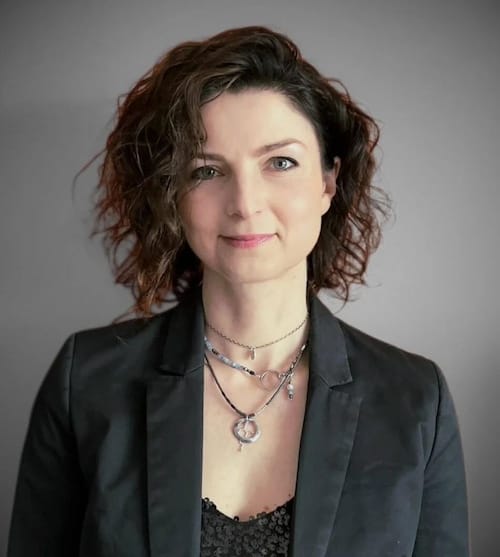
The author of the article is Katarzyna Hoffmann, co-owner of the Polish Language Center Varia in Kraków. She graduated in German Philology from the Jagiellonian University in Kraków.